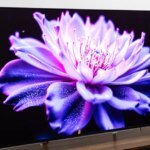
LG OLEDs are constantly among the finest TVs you will get, and I’ve misplaced rely what number of occasions I’ve really useful them to household and mates. Add the LG G5 to that checklist. It’s LG’s high-end gallery-style TV, designed to look refined and smooth mounted on the wall — which it achieves due to its slim profile and flush mounting. Its black ranges are deep and inky, and coloration and grayscale accuracy are spot on. It delivers a stunning, participating picture that makes a standard film evening one thing particular.
Most spectacular in regards to the G5 is its important bump in brightness over final yr’s G4. Over the previous couple of years, quantum-dot OLEDs from Samsung and Sony have supplied brightness similar to LG’s WOLED (or white OLED) designs, however with higher coloration quantity at excessive brightness. LG wanted an replace to compete, and with a brand new sort of OLED panel, it does. It’s a formidable leap ahead.


$1997
The Good
- Unbelievable OLED brightness with excellent blacks
- Vibrant, correct colours
- Nice recreation options
The Dangerous
- The Magic Distant must go
- Sound is lackluster
The panel expertise that offers the G5 this leap is Primary RGB Tandem OLED. It has 4 emissive layers (crimson, inexperienced, and two blue) as a substitute of the three layers (yellow and two blue) utilized in LG’s earlier WOLED TVs. The additional layer permits for extra mild with out utilizing as a lot energy, and the devoted crimson and inexperienced layers assist enhance coloration purity. The G5 nonetheless has a white subpixel, as do non-Main RGB Tandem OLEDs, for added brightness.
LG Show (the corporate that makes Main RGB Tandem OLED panels for LG Electronics and others) claims the expertise can rise up to 4,000 nits, which rivals some high-end mini-LED TVs from TCL and Hisense. The 65-inch LG G5, in my testing, didn’t obtain that lofty quantity, nevertheless it nonetheless measured over 2,400 nits from a ten p.c window. That’s practically 1,000 extra nits than the G4, and pretty much as good as mini-LED TVs simply a few years in the past. So specular highlights — a streetlight or the reflection of the solar off of the ocean waves — are brighter.
But it surely’s not simply in regards to the excessive brightness. The foremost advantages of OLED over LED TVs are its pixel-level management and excellent blacks. These excellent blacks paired with the spectacular brightness of the Main RGB Tandem OLED panel equal an unbelievable degree of distinction. The G5 maintains the blacks in a vibrant room effectively, too. It’s a major enchancment over the G4; the MLA layer would replicate the ambient mild and trigger the display screen to have raised black ranges.
Reviews from earlier in the year identified that the G5 exhibited some points with HDR content material, particularly in darker scenes. Simply-above-black ranges have been a bit elevated, there was some posterization (blockiness) in shadows, and it often had what are known as floating blacks, the place the black ranges in a scene shift relying on what’s on display screen.

Fortunately, firmware updates have addressed these points. I didn’t see any posterization or floating blacks in shadow scenes in Blade Runner 2049 or Fellowship of the Ring. There’s a minor situation popping out of black, the place as a substitute of a completely easy fade in, it jumps from black to a darkish grey. I might solely see it occur when the room was darkish (any ambient mild coated the impact), and it solely occurs in these fade-in moments, so I’m being extremely vital. I don’t count on most will see or be bothered by it.
The LG G5 is on the market in 5 totally different sizes — 55, 65, 77, 83, and 97 inches — and all sizes besides the most important use Main RGB Tandem OLED expertise. LG loaned us a 65-inch mannequin with an MSRP of $3,399.99, though it at the moment could be discovered for $1,999.99. The G Collection, which used to face for Gallery Collection, is slightly below an inch thick and is designed to hold flush on the wall. And whereas LG included a stand mount with the 55- and 65-inch 2024 G Collection TVs, it’s gone again to solely together with a wall mount. A desk stand is on the market for the 55- and 65-inch G5 for $99.99.
The G5’s connection ports are in an L-shaped cutout within the again panel with sufficient area to route them towards the center of the TV and right down to your sources and energy. It means that you can gather all the cables collectively and run them down your wall in a single bundle, however you’ll nonetheless wish to have a cable trough to maintain every part wanting tidy, or run them via your wall.
The again panel contains 4 HDMI 2.1 ports (one with eARC) that assist as much as 120Hz variable refresh fee and Auto Low Latency Mode (ALLM) — which mechanically switches to low-latency recreation mode when a gaming sign is detected. It additionally has three USB 2.0, 100Mbps LAN, optical digital audio out, and an ATSC 1.0 tuner. (LG stopped including an ATSC 3.0 tuner for over-the-air 4K broadcasts just a few years in the past, and it doesn’t seem like it’ll begin once more anytime quickly. Adoption of the expertise, additionally known as NextGen TV, has been gradual, though TCL, Hisense, and Sony TVs nonetheless ship with ATSC 3.0 tuners.)
If you wish to get full efficiency out of the LG G5 (or any TV, for that matter) with out a calibration, it’s vitally necessary that you just swap it out of the default image mode — Auto Energy Save, on this case. Not solely will it trigger the image to look very blue — affecting each grayscale and coloration accuracy — its brightness is proscribed considerably.
I arrange every TV in my front room on my residence theater credenza. I stream motion pictures and exhibits via the TV’s apps, play discs on my Oppo UDP-203 4K Blu-Ray participant (together with the Spears & Munsil Extremely HD Benchmark disc) and flicks from a Kaleidescape Strato V participant, and play video games on my Xbox Collection X and PlayStation 5. That is carried out at totally different occasions of the day and totally different lighting circumstances, with curtains open, or lamps and overhead lights on, or with blackout curtains as much as maintain the room darkish. Whereas I’m a licensed ISF Degree 3 calibrator, I don’t calibrate the TVs earlier than measurement, because the overwhelming majority of TV house owners don’t hassle. So it’s necessary to understand how effectively the TVs carry out out of the field, with minor tweaks within the menu anybody can do.
For measurement, I take advantage of Portrait Displays’ Calman coloration calibration software program, a Murideo 8K Seven sample generator, an X-rite i1 Professional 3 spectrophotometer, Portrait Shows’ C6 HDR5000 colorimeter, a Konica Minolta LS-100 luminance meter, and Leo Bodnar 4K lag tester.
Filmmaker Mode is essentially the most correct, with glorious grayscale monitoring in each SDR and HDR and nice coloration. Measurements with our pattern confirmed HDR tended a bit blue because the picture received brighter and SDR was a bit crimson, however these inaccuracies didn’t present in precise use. I’d advocate it for every part you watch. Additionally, the primary time you placed on one thing in SDR, HDR10, or Dolby Imaginative and prescient, make certain to set your image mode to Filmmaker once more, as selecting it for one doesn’t set it as your choice for the others.
Watching motion pictures and exhibits on the G5 is an absolute pleasure. The multitude of explosions in Mad Max: Fury Highway are vibrant and vibrant, punctuating the motion of the chase via the desert. On different TVs, they will get too oversaturated and look pretend, however the reds and oranges on the G5 look life like. The specular highlights are much more spectacular because the chase enters the storm and lightning illuminates the sky.
Past the check discs, the G5 excelled with on a regular basis household viewing. Whereas I like to attract the curtains, flip off the lights, and immerse myself in a film, for almost all of our TV watching, the lights are on. Due to the G5’s brightness functionality, the picture nonetheless pops. Pastries, breads, and muffins on The Nice British Baking Present look detailed and attractive. F1 liveries throughout race weekends are dynamic and detailed as they velocity down the monitor, particularly the crimson of the Ferrari and papaya of the McLaren. And the G5 handles reflections effectively, with mild from lamps dispersing sufficient that it isn’t too distracting — until there’s a darkish scene, the place a purple hue from the anti-glare coating could be seen.
Even in SDR, the G5 can get vibrant sufficient to look at with no issues in a lit room. With out altering any brightness settings, the TV maintains round 330 nits from a 2 p.c window to a 50 p.c window earlier than it lowers to 284 nits for a full white display screen. That’s above the SDR skilled commonplace brightness goal for a darkish room (which is 100 nits) used when mastering content material, however since most of us watch with some degree of ambient mild, it’s a superb degree. When you want extra, you possibly can flip off Power Saving Step within the Normal menu, which lets you modify the OLED Pixel Brightness setting. With it set to 100 and Peak Brightness set to Excessive, the G5 can attain over 900 nits in SDR.
Why am I giving the G5’s efficiency such reward when it got here in lifeless final throughout this yr’s Value Electronics TV Shootout? Two causes. First, lots of the points the G5 confirmed at that occasion have since been addressed with firmware updates. For example, grayscale coloration shifts current on the occasion have considerably improved on my mannequin. Second, the TV Shootout’s objective is to see how effectively the calibrated opponents measure as much as the $38,000 Sony BVM-HX3110 reference monitor utilized in postproduction, to not check the general efficiency of the TV in a number of real-world viewing circumstances. I’ll additionally reiterate that I didn’t calibrate the G5, because it’s not one thing nearly all of TV house owners do.

The G5 is a good gaming TV, too. It helps 4K/120Hz gaming on a console and as much as 165Hz with a PC. There isn’t any perceptible enter lag; simply ensure you have Sport Optimizer enabled. Utilizing the Sport image mode will make it possible for’s the case, however it is vitally blue (as recreation modes are typically). For extra correct coloration, go to Image -> Superior Settings -> Shade -> White Stability and alter the Shade Temperature to Heat 40.
When you don’t have the area for a soundbar or, higher but, a encompass sound setup, the LG’s sound will suffice. But it surely lacks pleasure and didn’t draw me into what I used to be watching. The TV will get a lot loud, and dialogue intelligibility is nice, however its low-end response doesn’t ship the growth.
With the G5, LG has eliminated assist for DTS audio codecs (which regularly have much less compression than Dolby), together with DTS:X. Most streaming platforms assist Dolby, with DTS principally relegated to bodily media, so it’s not a significant situation, though Sony, Hisense, and TCL nonetheless assist DTS. However for people who route their disc participant audio via the TV, don’t count on the G5 to move via any DTS audio to your audio system.
LG’s webOS interface works effectively sufficient, however as with all TV OS platforms, nearly all of the display screen is used for sponsored content material or adverts. I spent my time on the homescreen choosing which streaming app to make use of and ignoring the remainder. LG isn’t alone within the proliferation of adverts on TVs, nevertheless it isn’t doing something to restrict it, both.

I’m additionally prepared for LG to retire the magic wand performance of its distant — which lets you management a cursor on display screen by waving the distant round — or at the least allow us to flip it off. I’ve all the time discovered it irritating to make use of, and the cursor pops up once I don’t need it to. All it takes is a bit jostle as I (or my canines) unintentionally knock it on the espresso desk or the sofa. The distant additionally isn’t backlit and lacks an enter button. As an alternative it’s essential to maintain down the House Hub button — which is above the House button — to name up the enter choose.
The LG G Collection has all the time been a formidable OLED TV, however with the introduction of the G5 and Main RGB Tandem expertise, it’s reached new heights. Its picture high quality stands alongside the QD-OLED Sony Bravia 8 II, though I discover the Sony’s Google OS interface simpler to make use of than webOS. The G5’s specular highlights sparkle, blacks are deep, there’s nice shadow element, and coloration is superbly correct. When a TV appears to be like this good, the minor drawbacks — webOS, the distant, and the sound — are merely footnotes. The LG G5 has pushed the boundaries of OLED’s talents and delivers an attractive, participating picture.
- Decision: 4K UHD (3840 x 2160)
- Show tech: OLED (Main RGB Tandem)
- TV OS: webOS
- HDR assist: Dolby Imaginative and prescient, HDR10, HLG
- Native refresh fee: 120Hz (as much as 165Hz with VRR)
- Audio assist: Dolby Atmos, Dolby Digital
- Gaming assist: VRR, ALLM, Sport Optimizer, G-Sync appropriate, HGIG
- Connections: 4x HDMI 2.1 (one with eARC), 3x USB 2.0, optical audio out, ATSC 1.0 tuner
- Sizes obtainable (MSRP): 55-inch ($2,499.99), 65-inch ($3,399.99), 77-inch ($4,499.99), 83-inch ($6,499.99), 97-inch ($24,999.99)
Images by John Higgins / The Verge