Thousands and thousands of coral larvae on the Nice Barrier Reef have an elevated probability of replenishing degraded reefs due to the ‘larval seedbox’ – a coral restoration know-how developed by CSIRO, Australia’s nationwide science company, with Southern Cross College.
Outcomes from the primary trial of larval seedboxes have discovered coral settlement to be as much as 56 instances increased throughout 1000’s of sq. meters of reef.
The trial was carried out at Lizard Island in 2024 and exhibits robust promise to be used of seedboxes in scaling up coral restoration.
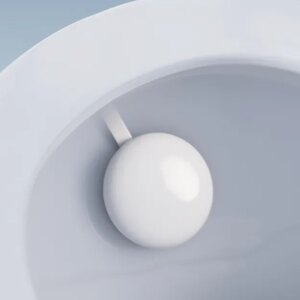
Dr Christopher Doropoulos, Senior Analysis Scientist at CSIRO, mentioned the larval seedbox is a straightforward, environment friendly and cost-effective device to assist enhance coral larval survival, delay their dispersal, and discover optimum habitat for settlement.
“The seedboxes work as a supply system, permitting coral larvae extra time to disperse and choose the Nice Barrier Reef, the place they will set up themselves and develop into juvenile corals,” mentioned Doropoulos.
“We tradition coral larvae following coral spawning, an annual mass reproductive occasion the place many several types of corals launch bundles of eggs and sperm into the water to fertilize externally.
“This permits us to gather 10s of tens of millions of coral larvae from mass cultures to fill the larval seedboxes.
“The larval seedboxes are deployed onto the reef, from which the larvae exit when prepared and drift with the currents to cowl areas of greater than two hectares of reef. This method delivers a excessive density of larvae over a lot bigger areas than beforehand demonstrated, boosting coral restoration potential at scale.”
Because the annual mass coral spawning occasion takes place throughout the Nice Barrier Reef in November, a second trial is underway within the Whitsundays.
Professor Peter Harrison from Southern Cross College mentioned this analysis will present a useful alternative to check the effectiveness of the approach in quite a lot of reef situations.
“We’re anticipating the discharge of as much as 20 million larvae at a number of areas, and the workforce will proceed to observe the longer-term effectiveness of the larval seedbox supply over 9 to 12 months.”
This analysis is a collaboration between CSIRO and Southern Cross College, supported by the Nice Barrier Reef Basis, in partnership with the Australian Institute of Marine Science and native stakeholders.
The paper on the success of the primary trial at Lizard Island might be revealed in Ecological Purposes.