The recovered messages, which you’ll read here, present how collaboratively the emoticon was developed—not a lone genius second however an ongoing dialog proposing, refining, and constructing on the group’s concepts. Fahlman had no concept his synthesis would develop into a elementary a part of how people categorical themselves in digital textual content, however neither did Swartz, who first instructed marking jokes, or the Gandalf VAX customers who had been already utilizing their very own smile symbols.
From emoticon to emoji
Whereas Fahlman’s text-based emoticons unfold throughout Western on-line tradition and remained text-character-based for a very long time, Japanese cell phone customers within the late Nineties developed a parallel system: emoji. For years, Shigetaka Kurita’s 1999 set for NTT DoCoMo was broadly cited as the unique. Nevertheless, latest discoveries have revealed earlier origins. SoftBank released a picture-based character set on cellphones in 1997, and the Sharp PA-8500 private organizer featured selectable icon characters as early as 1988.
In contrast to emoticons that required studying sideways, emoji had been small pictographic photos that might convey emotion, objects, and concepts with extra element. When Unicode standardized emoji in 2010 and Apple added an emoji keyboard to iOS in 2011, the format exploded globally. At the moment, emoji have largely changed emoticons in informal communication, although Fahlman’s sideways faces nonetheless seem usually in textual content messages and social media posts.
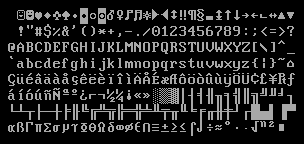
As Fahlman himself notes on his web site, he could not have been “the primary particular person ever to sort these three letters in sequence.” Others, together with teletype operators and personal correspondents, could have used related symbols earlier than 1982, maybe even as far back as 1648. Writer Vladimir Nabokov suggested earlier than 1982 that “there ought to exist a particular typographical signal for a smile.” And the unique IBM PC included a dedicated smiley character as early as 1981 (maybe that ought to be thought of the primary emoji).
What made Fahlman’s contribution important wasn’t absolute originality however quite proposing the suitable resolution on the proper time in the suitable context. From there, the smiley might unfold throughout the rising international pc community, and nobody would ever misunderstand a joke on-line once more. 🙂