- Valve has formally launched its new Steam Body VR headset
- The brand new Quest 3 rival can do each wi-fi PC VR and standalone gaming
- There’s at the moment no phrase on pricing or a launch date
It is lastly right here – after greater than 4 years of Valve Deckard rumors, Valve’s standalone PC VR headset has landed within the thrilling type of the brand new Steam Body.
In a shock announcement (or maybe not that out-of-the-blue, if you happen to’ve been following the recent rumors), Valve has revealed all of the official particulars concerning the Steam Body and the way it compares to the best VR headsets.
In short, the Steam Frame is built to compete with the Meta Quest 3 and to offer full PC VR gaming via a wireless adapter. But what else have we learned? Here are the seven main things you need to know about the Steam Frame…
1. It’s built for both PC VR and standalone gaming

In theory, the Steam Frame could offer the best of both worlds for VR fans. For meatier PC VR games such as Half-Life Alyx, there’s a Wi-Fi 6E (6Ghz) wireless adapter included for a stable, low-latency connection to your PC.
While that already means no annoying wires, you can also go completely PC-free with the Steam Frame. That’s because it can also run less intensive games locally, a bit like a wearable Steam Deck – or indeed, a Meta Quest 3.
2. The specs are fantastic
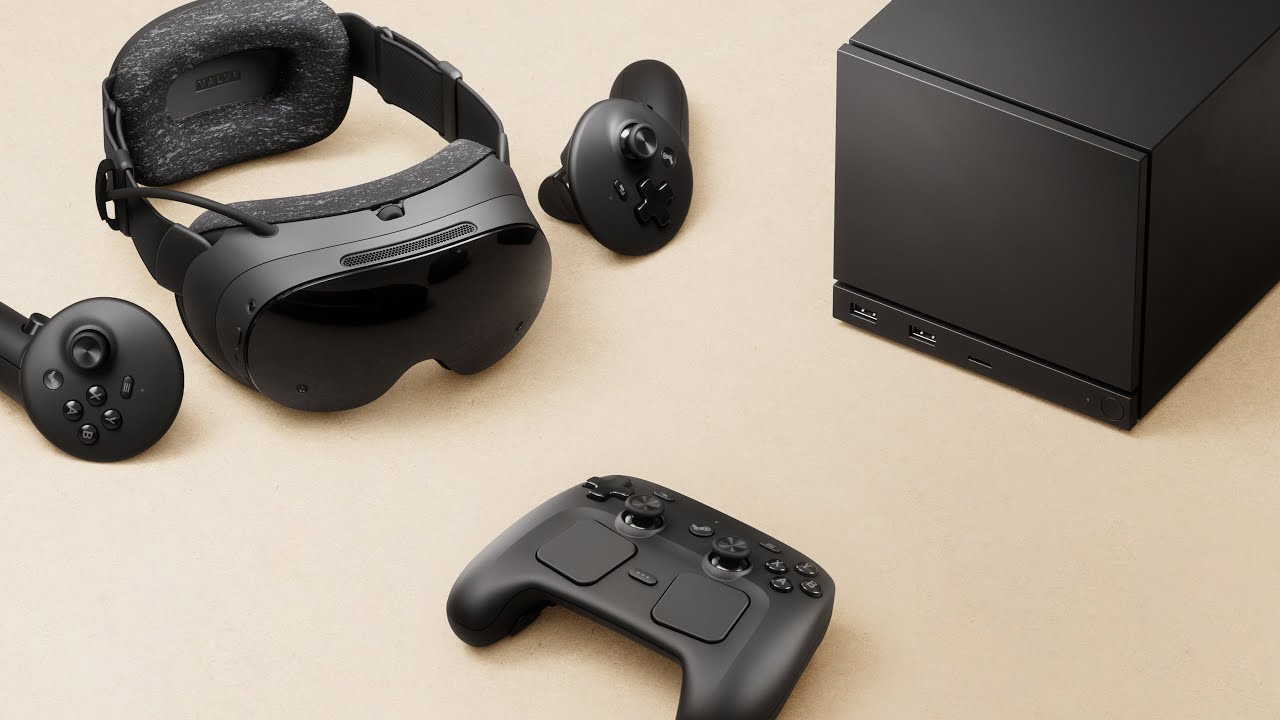
On paper, the Steam Body is an impressively highly effective mid-range headset. You get 16GB RAM (twice as a lot because the Meta Quest 3) and a mysterious 4nm Snapdragon ARM processor.
Valve hasn’t mentioned precisely which processor that’s, however there’s good cause to imagine it is a step above the XR2 Gen 2 that you simply’ll discover within the Quest 3. Storage-wise, there are additionally 256GB and 1TB choices, plus a microSD slot for enlargement.
The latter is one thing you will not discover on the Quest 3. So whereas 256GB is similar quantity of storage because the top-spec Meta Quest 3S, and solely half of what you get on the Quest 3, the Steam Body provides extra storage flexibility.
3. There’s no OLED version
Based on leaks that Valve was developing two Steam Frames, and the existence of a Steam Deck OLED, many assumed one mannequin would pack an OLED show. This proved to not be the case.
Valve is making two Steam Frames, however the distinction is solely storage capability (256GB Vs 1TB, with an SD card slot for enlargement); there may be sadly no OLED model for now.
As an alternative, the Steam Body opts for LCD with a 2,160 x 2,160 pixel-per-eye decision, which is corresponding to the two,064 x 2,208 per eye for Meta’s Quest 3.
4. Where’s the color passthrough?

Valve’s specs sheet for the Steam Frame says it boasts a pair of monochrome cameras for passthrough, which means black and white – so, no full-color passthrough.
This means the Frame will be a proper virtual reality headset, rather than a mixed reality device like what Meta, Apple, and Samsung produce.
On one hand, this can be a irritating downgrade – combined actuality has its makes use of, in any case. Nonetheless, on the similar time most MR video games of notice provide efficient VR modes too, so it may not really feel just like the drowngrade it appears on paper.
What’s extra, Valve has additionally teased a “person accessible enlargement port”, which leaves open the door to the potential of an elective module that provides full-color passthrough at an added value. We’ll have to attend and see on that one.
5. Eye-tracking enabled

As with other premium VR headsets, the Steam Frame is set to boast eye-tracking for one important reason: foveated rendering.
Basically the VR headset can save on compute power by only rendering in full quality the part of the screen you’re actively looking at. This allows a game to boast more impressive graphics by simply using the same CPU and GPU more efficiently, no additional power required.
Now, not a lot of games have implemented this in the past, but Steam’s catalogue is so expansive I’m hopeful we’ll see a lot more games take advantage of this feature going forward.
6. No price confirmed

Valve has yet to confirm a price, but based on the specs it won’t be cheap, and leaks suggest it’ll cost $1,200 (around £915 / AU$1,830).
This feels right. It has some upgrades over the Quest 3 (namely eye-tracking), and lacks some of the high-end features of pricier models (like the Galaxy XR‘s OLED show), so falling between the funds and premium worth factors is smart.
Clearly leaks must be taken with a pinch of salt, and varied elements might have an effect on the ultimate worth, however I might be shocked if it prices significantly greater than the leak suggests. That will be a full-on personal purpose for Valve, however stranger tech choices have been made.
7. No new software for now…

The Valve Index launched alongside a new Half-Life game, but so far there’s been no word of exclusive games coming to Steam’s platform to celebrate the launch of the Frame and Steam Machine.
In what feels like an internet conversation ripped from the noughties, there has been plenty of online speculation and leaks suggesting new games would be coming to the Steam Frame ahead of its launch. Specifically, Half-Life 3.
Where real rumors begin and trolling ends is impossible to decipher when Half-Life 3‘s name is uttered, but new software doesn’t seem utterly out of the question. Perhaps Valve is simply waiting until 2026 when it’s closer to the launch for its new tech to finally unleash these new titles on the public.
Follow TechRadar on Google News and add us as a preferred source to get our professional information, critiques, and opinion in your feeds. Make sure that to click on the Observe button!
And naturally it’s also possible to follow TechRadar on TikTok for information, critiques, unboxings in video kind, and get common updates from us on WhatsApp too.