As federal immigration enforcement exercise tied to Operation Metro Surge has unfolded in Minneapolis, social media has been flooded with a mixture of actual on-the-ground footage and extremely lifelike AI-generated photos and movies.
Sadly, it’s getting more and more tough to inform what truly occurred from what was fabricated in an AI video generation tool, which nearly anybody can do with platforms like Grok, Veo 3.2 and Sora.
I am going to admit, even I’ve shared movies that I assumed had been actual. It may be very arduous to inform, which is why researchers and fact-checkers have warned that convincing deepfakes tied to those occasions are spreading quickly throughout platforms like X, TikTok and Facebook — typically racking up thousands and thousands of views earlier than being debunked.
Should you’re making an attempt to make sense of what you’re seeing on-line, listed here are 5 sensible methods to identify AI-generated or manipulated content material.
1. Odd actions, lighting or physics
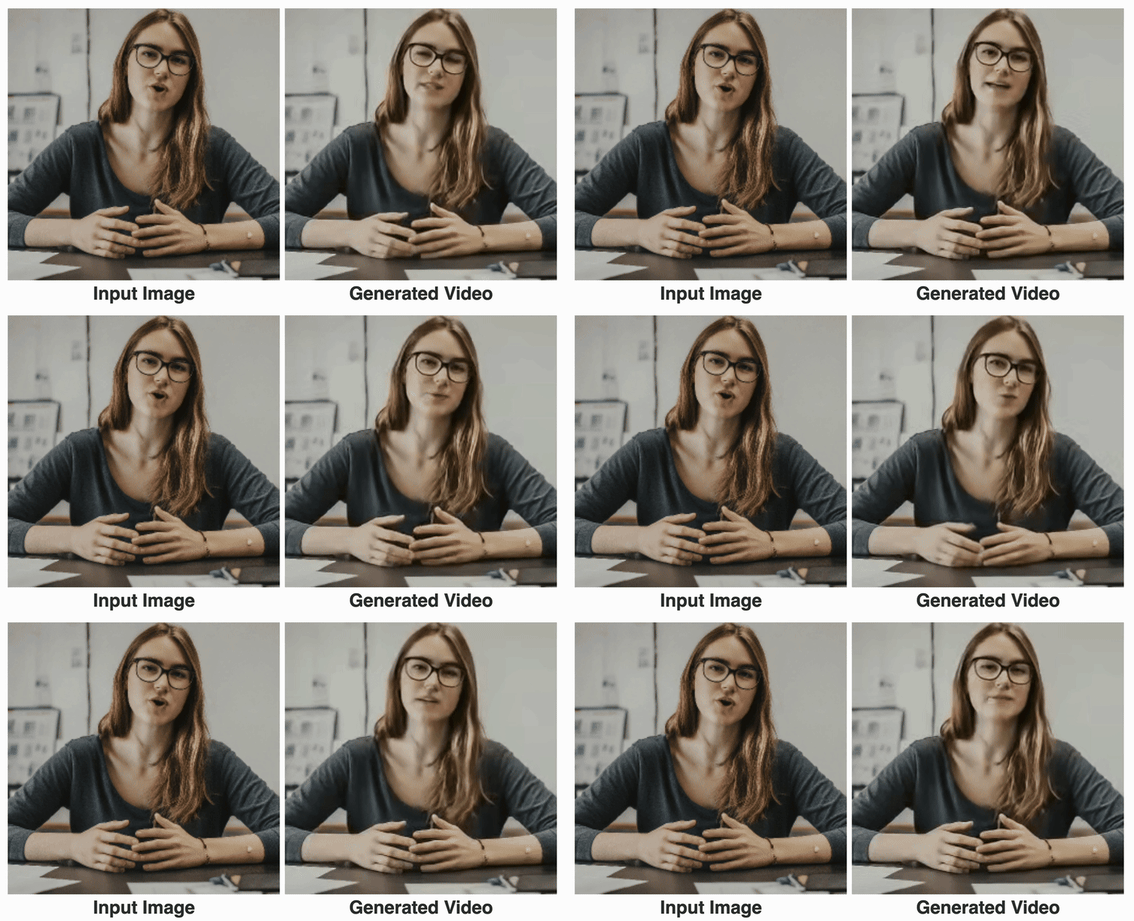
Some of the frequent giveaways of AI video is delicate visible “weirdness.” It is that uncanny valley impact of individuals shifting in barely unnatural methods, limbs that look stiff or warped or shadows that don’t fairly match the sunshine supply. These imperfections might be arduous to catch at first look, however they’re a basic deepfake crimson flag.
The voices within the movies have an identical impact of sounding nearly distant, even when the video is a close-up.
2. Unusual or unreadable textual content within the background

AI typically struggles with lifelike textual content. Should you spot road indicators, badges, uniforms or labels that look misspelled, blurry or nonsensical, that’s a robust trace that the picture or video might have been generated relatively than filmed. A number of viral clips associated to Minneapolis have already been flagged for precisely this situation.
You might also discover issues like car doorways opening in the wrong way, too many handles or no brand in any respect on a car.

Some deepfakes nonetheless carry delicate (or not-so-subtle) watermarks from the AI instruments used to create them. Should you see logos, faint branding or AI tags overlaid on a clip, that’s a transparent signal it didn’t originate from an actual digital camera.
But, these usually are not at all times seen as typically on social media customers will add emojis or textual content over these watermarks and even crop them out completely.
4. No credible supply

Be cautious of posts that make dramatic claims however don’t hyperlink to a verified information group, reporter or official supply. Deepfake creators typically pair deceptive visuals with emotionally charged captions to maximise shares — even when the footage itself is faux.
You may as well take a screenshot of the submit and add immediately into ChatGPT and ask for it to search out the supply of the picture. Typically, ChatGPT can discover what the picture is referring to whereas sharing the unique context.
5. Mismatch with verified reporting

If respected information shops have already printed confirmed footage from a scene, evaluate what you’re seeing to these clips. AI-altered movies might look comparable at a look, however nearer inspection typically reveals inconsistencies in angles, individuals, timing or environment.
Bonus tip: search for a number of confirmations

Earlier than believing — or sharing — a viral clip, examine whether or not no less than two credible information organizations have independently verified it. Should you can’t discover any dependable affirmation, it’s safer to imagine the footage might be manipulated.
Backside line
Deepfakes can muddy the general public document, drown out actual eyewitness proof and make it more durable to grasp unfolding occasions. As AI instruments proceed to enhance, distinguishing reality from fabrication will solely develop into more difficult, which is why creating a essential eye is extra essential than ever.

Comply with Tom’s Guide on Google News and add us as a preferred source to get our up-to-date information, evaluation, and evaluations in your feeds.
Extra from Tom’s Information